
How to Prevent Frozen Pipes and What Your Homeowners Insurance Actually Covers
It’s 2 AM on a frigid Ohio winter night. You wake up to use the bathroom, turn on the faucet, and nothing comes out. Your heart sinks as you realize what’s happened: frozen pipes.
Or worse – you wake up to the sound of rushing water and discover a burst pipe has flooded your basement with thousands of gallons of water, destroying everything in its path.
At DSB Insurance Agency in Chillicothe, we see this scenario play out dozens of times every winter across Ross County. Frozen pipes are the #1 cause of winter homeowners insurance claims, with the average claim costing between $5,000 and $10,000. Some catastrophic burst pipe claims exceed $50,000.
The tragedy? Nearly all of these claims are 100% preventable.
This comprehensive guide will teach you everything you need to know about preventing frozen pipes, what to do if your pipes freeze, and how your homeowners insurance handles these claims – including the critical mistakes that can get your claim denied.
Why Frozen Pipes Are So Dangerous (And Expensive)
The Science of Frozen Pipes
Water expands by approximately 9% when it freezes. When water freezes inside a pipe, this expansion creates enormous pressure – up to 2,000 pounds per square inch. That’s enough force to split copper, PVC, or steel pipes.
But here’s what surprises most people: the pipe doesn’t usually burst where it’s frozen.
When ice blocks a pipe, it creates pressure between the blockage and a closed faucet. This pressure causes the pipe to rupture somewhere along its length, often in a hidden area like behind walls or in the ceiling – which is why you might not discover the damage until the ice melts and thousands of gallons of water start flooding your home.
The True Cost of Frozen Pipes
Direct Damage:
- Water damage to ceilings, walls, and floors
- Destroyed personal belongings (furniture, electronics, clothing, documents)
- Ruined insulation
- Damaged structural components
- Mold growth (which can develop within 24-48 hours)
- Cost to repair or replace pipes
Indirect Costs:
- Hotel costs while home is uninhabitable
- Moving and storage of belongings
- Increased insurance premiums after claim
- Potential out-of-pocket costs if claim is denied
- Time lost from work dealing with repairs
Average Claims in Ohio:
- Minor frozen pipe damage: $2,000-$5,000
- Moderate burst pipe: $5,000-$15,000
- Severe flooding from burst pipe: $15,000-$50,000+
- Catastrophic damage: $50,000-$100,000+
Ohio’s Unique Frozen Pipe Risk
Ohio’s winter weather creates perfect conditions for frozen pipes:
Temperature Fluctuations: Our freeze-thaw cycles mean pipes repeatedly expand and contract, weakening them over time.
Older Housing Stock: Many Ohio homes were built before modern insulation standards, leaving pipes vulnerable in attics, crawl spaces, and exterior walls.
Polar Vortex Events: When temperatures plunge to -10°F or below (which happens every few years), even well-insulated pipes can freeze.
Extended Cold Snaps: It’s not just the coldest temperature that matters – pipes freeze when sustained cold (below 20°F for several hours) allows cold to penetrate deep into your home.
In Chillicothe and Ross County specifically, we’re particularly vulnerable because:
- Many homes have crawl spaces (common freeze zone)
- Rural properties often have well houses (high-risk area)
- Historic homes may have inadequate insulation
- Mobile homes are especially susceptible
How to Prevent Frozen Pipes: Your Complete Guide
Prevention is always cheaper than repair. Here’s everything you need to know to protect your home.
Indoor Pipe Protection
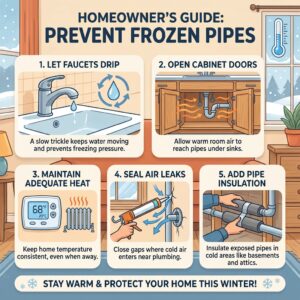
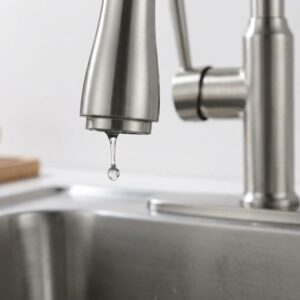
1. Let Faucets Drip
Why it works: Moving water doesn’t freeze as easily as standing water. Even a trickle of water flowing through pipes can prevent freezing.
How to do it:
- When temperatures drop below 20°F, open faucets to a slow drip (about 5 drips per minute)
- Focus on faucets on exterior walls
- Let both hot and cold water drip (this protects both supply lines)
- Even a pencil-thin stream of water is enough
Cost: Minimal – a dripping faucet uses about 1-2 gallons per day, costing pennies compared to thousands in repairs
DSB Insurance Tip: This is the single most effective prevention method and costs almost nothing. Do this EVERY time temperatures drop below 20°F.
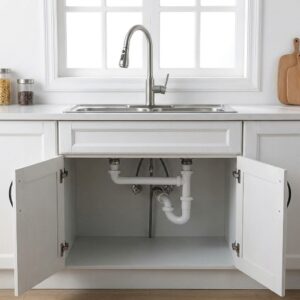
2. Open Cabinet Doors
Why it works: Pipes under sinks are often against exterior walls. Opening cabinet doors allows warm air to circulate around pipes.
How to do it:
- Open doors under kitchen and bathroom sinks
- Leave open during cold snaps (even overnight)
- Especially important on exterior walls
- Move chemicals/cleaners away from pets and children
Bonus: Combine this with dripping faucets for double protection.
3. Maintain Adequate Heat
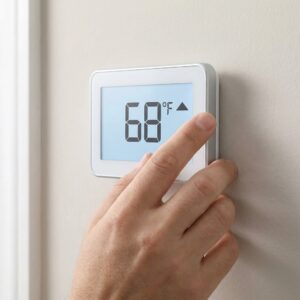
The Golden Rule: Never let your home’s interior temperature drop below 55°F, even if you’re away.
Best practices:
- Set thermostat to minimum 55°F (higher is better – 60-65°F ideal)
- Don’t close off unused rooms in winter (heat them all)
- Keep garage doors closed if water lines run through garage
- If you travel in winter, keep heat on and have someone check your home daily
DSB Insurance Critical Point: Setting your thermostat too low or turning heat off completely can void your insurance coverage for frozen pipe damage. Insurance companies consider this “failure to maintain heat” and may deny your claim.
4. Seal Air Leaks
Where cold air enters:
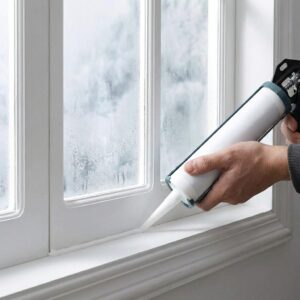
- Around pipes where they enter through walls, floors, or ceilings
- Gaps around electrical wiring
- Dryer vents and exhaust fans
- Cracks in foundation or walls
- Spaces around windows and doors near pipes
How to seal:
- Use spray foam insulation (Great Stuff brand works well)
- Caulk small gaps
- Add weatherstripping around doors and windows
- Install foam gaskets behind electrical outlet covers on exterior walls
5. Add Pipe Insulation
Where to insulate:

- Pipes in unheated areas (attics, crawl spaces, garages)
- Pipes on exterior walls
- Pipes near windows or doors
- Hot water pipes (prevents heat loss too)
Materials:
- Foam pipe insulation (most common, easy DIY)
- Heat tape or heat cables (for high-risk pipes)
- Fiberglass insulation (for larger areas)
- Newspaper (emergency insulation – better than nothing!)
Cost: Foam pipe insulation costs $0.50-$2 per linear foot – a $50 investment can prevent a $5,000 claim.
How to install:
- Measure your pipes
- Buy pre-slit foam insulation sleeves from hardware store
- Wrap around pipes
- Secure with tape or zip ties
- Seal seams and ends
Outdoor and External Pipe Protection
6. Disconnect and Drain Outdoor Hoses
Do this before first freeze:
- Disconnect all garden hoses from outdoor faucets
- Drain hoses completely
- Store hoses in garage or shed
- Drain any water remaining in outdoor faucets
Why it matters: Water trapped in connected hoses can freeze, back up into the pipe inside your wall, and cause the pipe to burst indoors.
7. Shut Off and Drain Exterior Faucets
Steps:
- Locate the shut-off valve for outdoor faucets (usually in basement or crawl space)
- Turn off the valve
- Go outside and open the outdoor faucet to drain remaining water
- Leave outdoor faucet open all winter (allows any remaining water to expand safely)
Frost-free faucets: Even these can freeze if a hose is left attached or if the faucet isn’t properly installed.
8. Protect Outdoor Faucets
Options:
- Foam faucet covers ($3-5 each at hardware stores)
- Insulated faucet socks
- Old towels wrapped and secured with plastic bag (budget option)
- Styrofoam cup secured with duct tape (emergency option)
9. Drain Sprinkler Systems
Before first hard freeze:
- Shut off water supply to sprinkler system
- Drain all water from system
- Blow out lines with compressed air (hire professional if needed)
- Insulate backflow preventer
Cost of neglect: Burst sprinkler lines can cost $500-$2,000 to repair in spring.
10. Insulate Crawl Spaces and Attics
Crawl Space Protection:
- Seal vents in winter (or install closeable vents)
- Insulate exposed pipes
- Consider adding a heater or heat lamp in extreme cold
- Insulate crawl space walls (not the floor above)
Attic Protection:
- Insulate attic floor (not roof)
- Seal any openings where warm air can escape
- Insulate pipes running through attic
- Ensure proper ventilation to prevent condensation
Special Situations
Mobile Homes
Mobile homes are extremely vulnerable to frozen pipes because:
- Pipes often run through unheated undercarriage
- Thin walls provide minimal insulation
- Skirting gaps allow cold air to reach pipes
Protection steps:
- Heat tape on all exposed pipes
- Seal all skirting gaps
- Add extra insulation to underbelly
- Keep heat on higher (65°F minimum)
- Open cabinet doors
Vacation Homes
If you’re away for winter:
- Option 1: Winterize completely (drain all pipes, add antifreeze to drains)
- Option 2: Keep heat on 55°F minimum and have someone check daily
- Never: Just turn off heat and hope for the best
Well Houses and Pump Houses
Protection:
- Insulate walls and roof
- Add a heat source (heat lamp, space heater, heat cable)
- Seal all gaps where cold air can enter
- Install a thermometer to monitor temperature
- Check regularly during cold snaps
What to Do If Your Pipes Freeze (Step-by-Step Emergency Guide)
Despite your best efforts, pipes can still freeze. Here’s exactly what to do:
Step 1: Recognize the Signs
How to know if pipes are frozen:
- Turn on faucet and only a trickle comes out (or nothing)
- Toilet won’t refill after flushing
- Frost visible on exposed pipes
- Strange smells from drains (ice blocking sewer vents)
- Banging or clanking sounds from pipes
Most likely locations:
- Pipes on exterior walls
- Unheated crawl spaces or attics
- Garage walls
- Under kitchen or bathroom sinks on outside walls
Step 2: Locate the Frozen Section
How to find it:
- Start from faucet and work backward
- Feel along pipes for very cold sections
- Look for frost or ice on pipe surface
- Check all vulnerable areas
Can’t find it? The freeze might be inside a wall or underground. Call a plumber immediately.
Step 3: Keep Faucet Open
Why: As you thaw the pipe, the ice will melt. An open faucet allows water and steam to escape, relieving pressure and preventing the pipe from bursting.
How:
- Open both hot and cold taps
- Leave open until full water pressure is restored
- Keep open even if only a trickle comes out
Step 4: Thaw the Pipe SAFELY
SAFE Methods:
Hair Dryer Method (Best for Accessible Pipes):
- Start near faucet, work toward frozen area
- Move dryer back and forth (don’t concentrate heat in one spot)
- Keep dryer several inches from pipe
- Continue until full water pressure restored
- Time needed: 20-45 minutes typically
Heat Lamp or Space Heater Method:
- Place near frozen pipe (at least 12 inches away)
- Open cabinet doors or remove access panels
- Leave in place until pipe thaws
- Never leave unattended
- Time needed: 1-3 hours
Hot Towel Method:
- Soak towels in hot water
- Wrap around frozen pipe
- Replace with fresh hot towels every 5 minutes
- Labor-intensive but safe
- Good for pipes that can’t be accessed with dryer
Heat Tape Method (For Accessible Pipes):
- Wrap heat tape around frozen section
- Plug in and monitor
- Follow manufacturer’s instructions exactly
- Available at hardware stores
Warm the Room Method:
- Turn up thermostat
- Use space heaters in room with frozen pipes
- Open cabinet doors
- Wait patiently
- Time needed: Several hours
DANGEROUS Methods – NEVER DO THIS:
❌ Never use open flame (torch, lighter, candles) – Extreme fire risk and can damage pipes ❌ Never use high-heat devices directly on pipes – Can cause pipes to burst ❌ Never use electrical devices near water – Electrocution risk ❌ Never pour boiling water on pipes – Thermal shock can split pipes ❌ Never ignore the problem – Frozen pipes can burst as they thaw
Step 5: Thaw Other Faucets
Why: If one pipe froze, others in your home might be frozen too.
What to do:
- Check all faucets in your home
- Look for reduced flow in other locations
- Thaw any other frozen pipes using safe methods above
Step 6: Call a Plumber If:
- You can’t locate the frozen pipe
- The frozen section is inside a wall or ceiling
- You don’t have access to the frozen area
- You’re uncomfortable attempting to thaw it yourself
- The pipe has already burst
- You smell gas (could indicate ice has cracked a gas line nearby)
Cost: $150-$300 for plumber call vs. $5,000+ for burst pipe damage. Worth it.
Step 7: Prevent Refreezing
After thawing:
- Keep faucets dripping
- Open cabinet doors
- Add pipe insulation
- Seal air leaks
- Keep heat on higher temperature
- Monitor weather forecast for continued cold
If a Pipe Bursts: Emergency Action Plan
Immediate Actions (First 5 Minutes)
1. Shut Off Main Water Supply
- Locate your main water shut-off valve NOW (before emergency)
- Usually in basement, crawl space, or where main line enters house
- Turn clockwise to close
- Label it clearly so family members can find it
Can’t find shut-off? Call your water company immediately for help.
2. Turn Off Electricity in Affected Areas
- If water is near outlets, appliances, or electrical panel
- Turn off breakers for affected rooms
- Don’t touch electrical items in standing water
3. Call a Plumber
- Don’t wait – call immediately
- Explain it’s an emergency burst pipe
- Ask for emergency service (yes, even at 2 AM)
4. Begin Damage Control
- Place buckets under active leaks
- Move furniture and belongings away from water
- Use towels to soak up water
- Don’t throw away anything yet (insurance needs to see it)
Next Steps (First Hour)
5. Document Everything
- Take photos and videos of all damage
- Photo the burst pipe
- Photo all water damage to structure
- Photo all damaged belongings
- Video walkthrough of entire affected area
- Don’t clean up yet – insurance needs to see extent
6. Call Your Insurance Agent
Call DSB Insurance: (740) 656-5119
What to tell us:
- “We have a burst pipe with water damage”
- Location of damage
- Approximate extent of damage
- What you’ve done so far (water shut off, etc.)
- Whether you need emergency services
We will:
- File the claim for you
- Explain coverage
- Coordinate with insurance company
- Advise on next steps
- Help with emergency services if needed
7. Stop Further Damage (Your Legal Duty)
Your insurance policy REQUIRES you to prevent additional damage:
- Remove standing water (wet/dry vacuum, mop, towels)
- Move belongings to dry areas
- Set up fans to dry wet areas
- Use dehumidifiers if available
- Tarp any roof damage if pipe burst in attic
Save all receipts for:
- Plumber emergency call
- Water extraction equipment rental
- Fans and dehumidifiers
- Tarps and emergency materials
- Hotel costs if home is uninhabitable
These costs are typically reimbursable by insurance.
First 24-48 Hours
8. Professional Water Extraction
- Consider hiring professional water restoration company
- They have commercial equipment
- Can prevent mold growth
- Insurance often covers this
- Call us before hiring to confirm coverage
9. Prevent Mold Growth
- Start within 24-48 hours
- Remove wet materials (carpet, drywall, insulation)
- Dry everything thoroughly
- Use fans and dehumidifiers constantly
- Monitor for mold smell or visible growth
10. Inventory Damaged Items
- Make detailed list of everything damaged
- Include: item description, age, purchase price, estimated replacement cost
- Group by room
- Don’t throw away until adjuster sees (or photo first)
Homeowners Insurance and Frozen Pipes: What You Need to Know
Understanding your coverage BEFORE you have frozen pipe damage is critical. Here’s everything you need to know.
What’s Typically Covered
Standard homeowners insurance (HO-3 policy) usually covers:
✅ Water damage from burst pipes – Damage to your home’s structure (walls, ceilings, floors)
✅ Damaged personal property – Furniture, electronics, clothing, belongings destroyed by water
✅ Pipe repair/replacement – Cost to repair or replace the burst pipe itself
✅ Professional water extraction – Water removal and drying services
✅ Mold remediation – Up to policy limits (typically $10,000-$50,000)
✅ Temporary living expenses – Hotel, meals if home is uninhabitable (Additional Living Expenses coverage)
✅ Emergency repairs – Immediate costs to stop damage (plumber call, materials)
What’s Usually NOT Covered
❌ Damage from lack of maintenance – If you failed to maintain reasonable heat
❌ Frozen pipes in unheated areas – If you knowingly left areas unheated
❌ Gradual damage – Slow leaks over time (must be sudden and accidental)
❌ Flood damage from outside sources – Requires separate flood insurance
❌ Pipe wear and tear – Old pipes that finally gave out
❌ Secondary vacation homes – If you didn’t winterize or maintain heat
❌ Negligence – If you ignored obvious problems
The “Reasonable Care” Requirement
This is CRITICAL: Your policy requires you to maintain “reasonable care” of your property. For frozen pipes, this means:
You must:
- Maintain heat at reasonable level (minimum 55°F)
- Drain outdoor faucets and sprinkler systems before winter
- Insulate pipes in known vulnerable areas
- Take reasonable precautions during cold weather
Insurance can deny your claim if:
- You turned off heat completely while away
- You set thermostat below 50-55°F in freezing weather
- You ignored prior frozen pipe incidents without fixing the problem
- You failed to properly winterize a vacation home
- You knew pipes were vulnerable and did nothing
Real Claim Example: Homeowner went on two-week vacation in January, set thermostat to 50°F to “save money.” Pipes froze and burst, causing $15,000 in damage. Claim was DENIED because insurance company determined 50°F wasn’t “reasonable” heat maintenance during sub-zero temperatures. Homeowner paid $15,000 out of pocket.
How to Prove You Maintained “Reasonable Care”
Documentation that helps your claim:
- Utility bills showing heat was on
- Thermostat photos showing temperature setting
- Receipts for pipe insulation installation
- Photos of winterization efforts (covered faucets, etc.)
- Plumber invoices for preventive maintenance
- Home inspection reports noting insulation
DSB Insurance Tip: Take photos of your thermostat setting before leaving on winter vacation. Keep utility bills showing normal usage. This proves heat was maintained.
Understanding Your Coverage Limits and Deductibles
Dwelling Coverage:
- Pays to repair structural damage (walls, floors, ceilings)
- Typically insured to full replacement cost
- Limit is on your declarations page
Personal Property Coverage:
- Usually 50-70% of dwelling coverage
- May be replacement cost or actual cash value (check your policy)
- Sub-limits apply to certain items (jewelry, electronics, etc.)
Deductibles:
- You pay this amount before insurance pays
- Typical deductibles: $500, $1,000, $1,500, $2,500
- Higher deductible = lower premium (but more out-of-pocket if claim)
Example:
- Frozen pipe damage: $8,000
- Your deductible: $1,000
- Insurance pays: $7,000
- You pay: $1,000
Should You File a Claim?
Not every frozen pipe incident should result in an insurance claim.
File a claim if:
- Damage significantly exceeds your deductible (by $2,000+ minimum)
- You can’t afford repairs out-of-pocket
- Extensive structural damage occurred
- Mold remediation is needed
- Multiple rooms are affected
Consider NOT filing if:
- Damage is less than or barely above deductible
- It’s minor damage you can repair yourself
- You caught it early with minimal damage
- You have significant claims history already
Why? Filing claims can:
- Increase your premiums
- Go on your claims history (follows you for 5-7 years)
- Make it harder to get insurance in the future
- Potentially lead to non-renewal if multiple claims
Call DSB Insurance (740) 656-5119 – We’ll help you evaluate whether filing makes financial sense.
The Claims Process: What to Expect
Step 1: Report the Claim (Day 1)
- Call your agent (DSB Insurance) or insurance company
- Provide policy number, description of damage
- Get claim number and adjuster contact info
Step 2: Documentation (Days 1-3)
- Photo/video all damage
- Create written inventory
- Save all receipts
- Make temporary repairs to prevent further damage
Step 3: Adjuster Visit (Days 3-7)
- Insurance adjuster inspects damage
- Documents extent of damage
- Creates estimate of repair costs
- Advises on coverage
Step 4: Settlement Offer (Days 7-14)
- Insurance company provides written settlement offer
- Breaks down what’s covered vs. not covered
- May come in two payments (ACV now, depreciation after repairs)
Step 5: Repairs (Weeks 2-6)
- Hire licensed contractors
- Make repairs
- Save all invoices and receipts
Step 6: Final Payment (Week 6-8)
- Submit final invoices to insurance
- Receive final payment (recoverable depreciation)
- Claim closed
Total Timeline: 6-8 weeks for straightforward claims, longer for complex claims
Common Reasons Frozen Pipe Claims Are Denied
1. Failure to Maintain Heat
- Most common denial reason
- Must maintain minimum 55°F
- Even if it “wasn’t that cold outside”
2. Vacant Property
- Home unoccupied for 30+ consecutive days
- No regular checks by responsible party
- Heat not maintained
3. Lack of Proper Winterization
- Vacation home not properly winterized
- Pipes not drained
- Heat not maintained
4. Negligence
- Prior frozen pipe incidents without corrective action
- Known vulnerable pipes not insulated
- Ignored plumber recommendations
5. Gradual or Repeated Damage
- Same pipe froze multiple times
- Slow leak over time
- Should have been discovered earlier
6. Excluded Property
- Commercial property on homeowners policy
- Property under construction
- Property specifically excluded
How to Protect Your Coverage
Before Winter:
- Review your policy with your agent
- Understand your responsibilities
- Document preventive measures
- Consider increasing coverage limits if needed
During Cold Weather:
- Maintain heat above 55°F always
- Let faucets drip during extreme cold
- Check vulnerable pipes regularly
- Document your precautions (photos of thermostat, dripping faucets)
If Leaving Town:
- Keep heat on minimum 60°F (higher is safer)
- Have someone check your home daily
- Shut off and drain water system (only if properly winterized)
- Document thermostat setting before leaving
- Keep utility bills to prove heat was on
After a Freeze:
- Check for damage immediately
- Report problems promptly
- Fix underlying issues (don’t just patch)
- Document repairs for future reference
Special Coverage Considerations
Water Backup Coverage: Most standard policies EXCLUDE sewer and drain backups. Consider adding:
- Sewer/Drain Backup Coverage ($50-150/year)
- Covers $5,000-$25,000 in damage
- Important if frozen pipes cause backup
Equipment Breakdown Coverage: Covers failure of:
- Water heaters
- Furnaces (which could lead to frozen pipes)
- Sump pumps
- Well pumps
Service Line Coverage: Covers damage to:
- Underground water lines
- Sewer lines
- Well pumps
- Important if freeze damage extends outside home
Ordinance or Law Coverage: If burst pipes damage your home and repairs require bringing up to current building codes:
- Standard coverage: Limited (10% of dwelling)
- Enhanced coverage: Up to 100% of costs
- Important in older Ohio homes
Cost Analysis: Prevention vs. Repair
Let’s look at the real numbers:
Prevention Costs (One-Time Investment)
| Item | Cost | Lifespan |
|---|---|---|
| Foam pipe insulation (100 ft) | $50-100 | 10+ years |
| Heat tape for pipes | $15-50 per section | 3-5 years |
| Outdoor faucet covers (4) | $12-20 | 5+ years |
| Weatherstripping kit | $20-40 | 3-5 years |
| Space heater for crawl space | $40-100 | 5+ years |
| Smart thermostat | $100-250 | 10+ years |
| Total Prevention Investment | $237-560 | Multi-year protection |
Repair Costs (Single Incident)
| Scenario | Cost Range |
|---|---|
| Minor frozen pipe (caught early) | $500-1,500 |
| Single burst pipe | $2,000-5,000 |
| Burst pipe with moderate damage | $5,000-15,000 |
| Multiple burst pipes | $15,000-30,000 |
| Catastrophic basement flooding | $30,000-100,000+ |
| Average frozen pipe insurance claim | $7,500 |
Additional Costs:
- Insurance deductible: $500-2,500
- Premium increase: $200-500/year for 3-5 years
- Time lost from work: $500-2,000
- Stress and inconvenience: Priceless
The Math:
- Prevention: $237-560 one-time
- Average claim: $7,500
- ROI: 1,200-3,100%
Prevention is the best investment you can make.
Ohio-Specific Frozen Pipe Considerations
Chillicothe and Ross County Risk Factors
Higher Risk Homes:
- Built before 1980 (older insulation standards)
- Crawl space foundations (pipes exposed to cold)
- Mobile homes
- Rural properties with well houses
- Historic downtown properties
- Homes with additions (pipes may route through unheated spaces)
Weather Patterns:
- Polar vortex events (January-February)
- Extended cold snaps (3+ days below 20°F)
- Temperature swings (freeze-thaw cycles weaken pipes)
- Ice storms (power outages lead to no heat)
Local Resources
24-Hour Emergency Plumbers (Chillicothe Area):
- Keep numbers handy BEFORE emergency
- Ask your plumber about winter service
- Know their emergency rates in advance
Ross County Emergency Services:
- Water department: For main line issues
- Electric company: For power outages affecting heat
- Emergency Management: During severe weather events
Insurance Resources:
- DSB Insurance Agency: (740) 656-5119
- Ohio Department of Insurance: (800) 686-1526
- Consumer advocacy: For claim disputes
Seasonal Preparation Checklist for Ohio Homeowners
October (Before First Freeze):
- [ ] Disconnect and drain outdoor hoses
- [ ] Shut off outdoor faucet water supply
- [ ] Install outdoor faucet covers
- [ ] Check crawl space insulation
- [ ] Test heating system
- [ ] Locate main water shut-off
- [ ] Review insurance policy
November-March (Winter Season):
- [ ] Keep garage doors closed
- [ ] Open cabinet doors during cold snaps
- [ ] Let faucets drip when below 20°F
- [ ] Maintain heat minimum 55°F
- [ ] Check vulnerable pipes during cold snaps
- [ ] Keep emergency plumber numbers handy
April (After Last Freeze):
- [ ] Inspect for winter damage
- [ ] Turn outdoor faucets back on
- [ ] Check for leaks
- [ ] Note any issues for next winter
- [ ] Remove outdoor faucet covers
Frequently Asked Questions
Q: At what temperature do pipes freeze? A: Pipes can begin freezing when temperatures drop to 20°F or below, especially if sustained for several hours. However, the risk depends on many factors: insulation, wind chill, pipe location, and water flow.
Q: How long does it take for pipes to freeze? A: Typically 4-6 hours of sustained temperatures below 20°F. However, pipes in unheated areas (crawl spaces, attics) can freeze in as little as 2 hours in extreme cold.
Q: Will my insurance cover frozen pipes if I was home? A: Yes, as long as you maintained reasonable care (kept heat on, didn’t neglect obvious problems). Being home doesn’t affect coverage – maintaining proper conditions does.
Q: Should I file a claim for $3,000 damage if my deductible is $1,000? A: Maybe not. You’d only receive $2,000 from insurance, but the claim goes on your record and could increase premiums by $200-400/year for up to 5 years with some carriers. That’s $1,000-2,000 in premium increases for a $2,000 payout. Call us to discuss: (740) 656-5119
Q: Can I turn off my water and drain pipes if leaving for winter? A: Only if you properly winterize (drain ALL water, add antifreeze to drains, completely shut down water system). Most people are better off keeping heat on 60°F and having someone check daily.
Q: Does homeowners insurance cover the plumber’s emergency call? A: It depends. Usually yes, as part of “emergency repairs to prevent further damage.” Save the receipt and submit with your claim.
Q: Will one frozen pipe claim make my insurance go up? A: Possibly. One claim may result in 10-25% premium increase for 3-5 years. Multiple claims could result in non-renewal. This is why prevention is so important.
Q: Do I need to file a claim immediately? A: You should REPORT damage to your insurance company within a reasonable time (days, not weeks). But you don’t have to formally file a claim immediately – you can assess damage first and decide if filing makes sense.
Q: What if my pipes freeze while I’m on vacation? A: If you maintained heat at 55°F+ and had someone checking your home, you’re typically covered. If you turned heat off or set it too low, the claim may be denied. This is why we recommend 60°F minimum when away.
Q: Are PEX pipes less likely to freeze than copper? A: PEX is slightly more freeze-resistant (it can expand more without bursting), but it can still freeze and burst. Don’t rely on pipe material – use proper prevention.
Q: Does leaving faucets running waste water? A: A slow drip uses minimal water (1-2 gallons per day) and costs pennies. It’s far cheaper than thousands in burst pipe damage. During extreme cold, it’s worth it.
Your Action Plan: Don’t Wait Until It’s Too Late
Frozen pipes are one of the most preventable homeowners insurance claims, yet they remain the #1 winter claim we see at DSB Insurance Agency every year.
This week, take these actions:
TODAY:
- Locate your main water shut-off valve (label it clearly)
- Add DSB Insurance to your phone contacts: (740) 656-5119
- Check weather forecast for upcoming cold snaps
THIS WEEKEND:
- Insulate vulnerable pipes
- Disconnect outdoor hoses
- Install outdoor faucet covers
- Check crawl space and attic insulation
- Test your heating system
BEFORE NEXT COLD SNAP:
- Review this guide
- Prepare to let faucets drip
- Plan to open cabinet doors
- Ensure heat stays above 55°F
Review Your Insurance Coverage Now
Don’t wait until you have frozen pipe damage to discover what your policy does and doesn’t cover.
Call DSB Insurance Agency today: (740) 656-5119
We’ll review your policy and answer:
- What’s your deductible?
- Do you have replacement cost or actual cash value coverage?
- Are there any exclusions you should know about?
- Do you need additional coverage (water backup, equipment breakdown)?
- What are your responsibilities to maintain coverage?
This 10-minute conversation could save you thousands in denied claims or out-of-pocket costs.
Contact DSB Insurance Agency
Have Questions About Frozen Pipe Coverage?
Need to Review Your Policy Before Winter?
Want to File a Claim?
We’re here to help.
DSB Insurance Agency
95 N. Mulberry St., Suite E
Chillicothe, OH 45601
(740) 656-5119
myagent@dsbinsurance.com
www.dsbinsurance.com
Office Hours:
Monday – Friday: 9:00 AM – 5:00 PM
Saturday: By Appointment
Emergency Claims: Call anytime
Serving Chillicothe, Ross County, and Southern Ohio since 1948.
The Bottom Line
Frozen pipes are:
- ✅ Preventable – 95% can be avoided with simple precautions
- ✅ Expensive – Average claim is $7,500
- ✅ Covered – But only if you maintain reasonable care
- ✅ Worth preventing – $200 in prevention vs. $7,500 in repairs
The three most important things to remember:
- Keep your heat on – Minimum 55°F, always (60°F+ if leaving town)
- Let faucets drip – When temperatures drop below 20°F
- Insulate vulnerable pipes – One-time investment, years of protection
And if pipes do freeze:
- Don’t panic
- Thaw safely (never use open flame)
- Call a plumber if needed
- Call DSB Insurance: (740) 656-5119
Winter in Ohio is unpredictable, but frozen pipe damage doesn’t have to be. Take action now to protect your home and your wallet.
Stay warm, Chillicothe!